
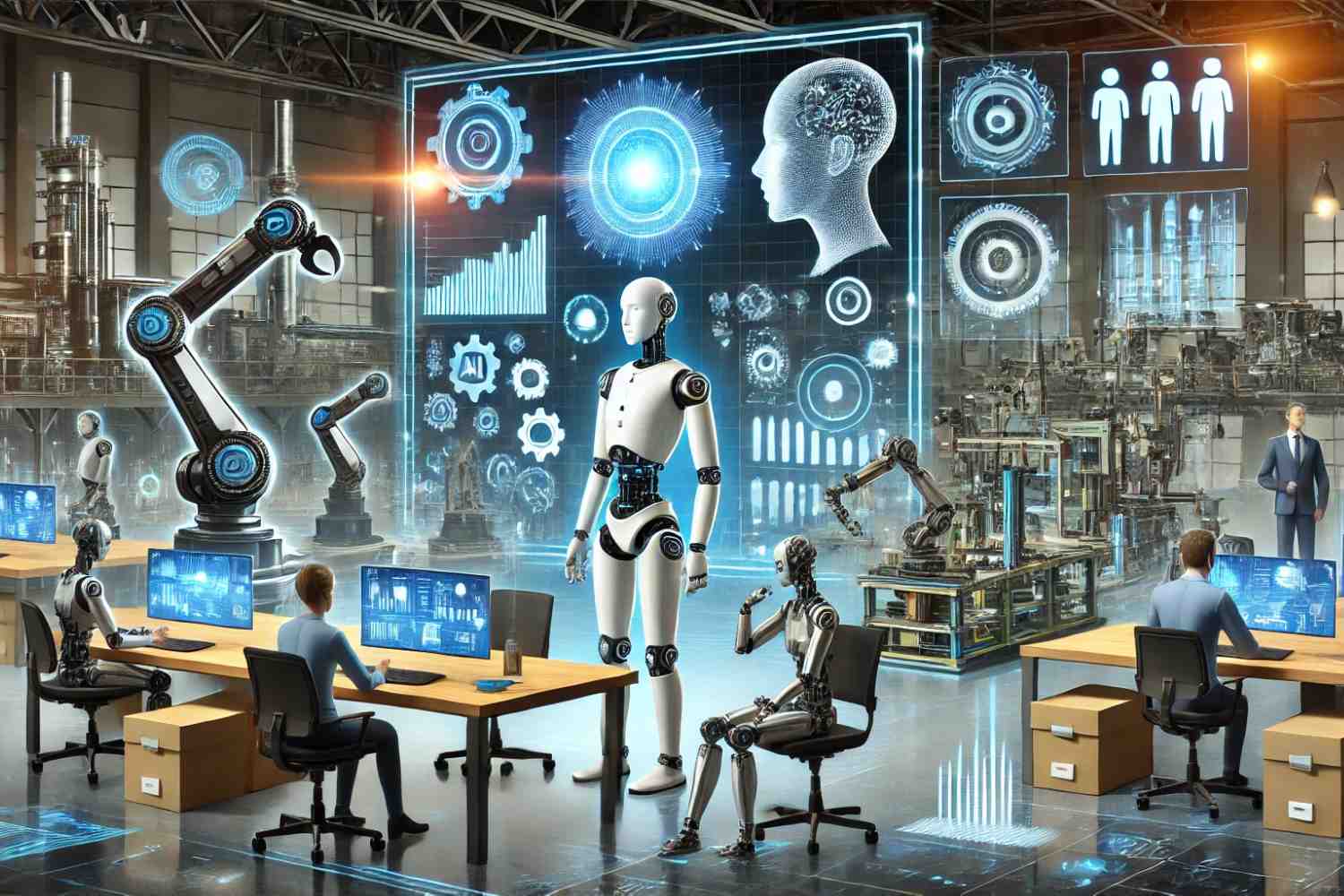
For decades, automation meant machines replacing repetitive manual tasks. But today, a new era is unfolding—one driven not just by robotics but by artificial intelligence. This next wave, often called Automation 2.0, goes far beyond mechanizing work. It’s about making systems smarter—capable of sensing, predicting, adapting, and learning.
Unlike previous industrial revolutions, the AI transformation isn’t loud or disruptive in the traditional sense. Instead, it’s happening quietly—embedded in software, logistics, communication systems, and everyday decision-making processes. From healthcare to finance, manufacturing to retail, AI is altering the way industries operate from the inside out.
This article explores what Automation 2.0 really means, how it works, and why it’s reshaping the global landscape right now.
Welcome to the Era of Intelligent Automation
Traditional automation handles tasks based on predefined rules. AI-powered automation doesn’t just follow instructions—it makes decisions.
Automation 2.0 combines:
- AI and machine learning
- Process automation tools
- Advanced analytics
- Robotics
- Natural language processing
- Autonomous systems
Together, they create workflows that can continuously improve and adapt without human intervention.
This shift is turning industries into dynamic, data-driven ecosystems.
Why Automation 2.0 Is Transforming Industries Quietly
Most people don’t notice these changes because Automation 2.0 often works behind the scenes:
- Algorithms streamline supply chains
- AI tools analyze risk before you click “submit”
- Chatbots handle customer queries instantly
- Predictive models guide medical decisions
- Autonomous software prevents fraud before it happens
The impact is enormous but subtle—integrated into systems in ways the average user rarely sees.
Where AI Is Creating the Biggest Impact
1. Manufacturing: Smart Factories Take the Lead
The manufacturing sector is seeing a shift from automated machines to fully intelligent operations.
Automation 2.0 brings:
- Predictive maintenance systems that avoid downtime
- AI-powered robotics that learn from errors
- Digital twins that simulate entire factories
- Autonomous quality control
Instead of reacting to problems, manufacturers now prevent them entirely.
2. Healthcare: AI at the Heart of Patient Care
In healthcare, AI is becoming a silent but powerful partner.
It supports:
- Early disease detection
- Automated diagnostics
- Personalized treatment plans
- Hospital workflow automation
- Drug discovery acceleration
Doctors are still at the core, but AI enhances accuracy and speeds up decision-making.
3. Finance: Algorithms Manage Risk Faster Than Humans
Automation 2.0 has transformed financial services into real-time, data-driven engines.
AI helps in:
- Fraud detection
- Algorithmic trading
- Customer onboarding
- Loan underwriting
- Compliance automation
Banks can now process vast amounts of data instantly, reducing errors and improving customer trust.
4. Retail: Behind-the-Scenes Intelligence
AI is reshaping both physical and online retail with smarter systems that anticipate buyer behavior.
Tools include:
- Dynamic pricing algorithms
- Product recommendation engines
- Automated inventory tracking
- AI-driven supply chains
- Checkout-free stores
The goal is frictionless, personalized shopping.
5. Logistics & Transportation: Moving Goods Smarter, Not Harder
The global supply chain is undergoing a massive AI upgrade.
Key innovations:
- Route optimization
- Warehouse automation
- Autonomous delivery bots
- Predictive shipment tracking
- Smart fleet management
Companies cut costs while increasing speed and reliability.
6. Energy & Utilities: Optimizing the Grid
AI is crucial in managing modern energy needs.
Automation 2.0 enables:
- Predictive demand forecasting
- Smart grid management
- Automated maintenance
- Renewable energy optimization
This ensures greater sustainability and efficiency on a global scale.
How Automation 2.0 Works: The Core Technologies
Automation 2.0 relies on a powerful stack of emerging technologies that work together.
AI + Data
AI algorithms learn from billions of data points, spotting trends humans would miss.
Machine Learning
ML models continuously improve—meaning systems become smarter over time.
Robotic Process Automation (RPA)
Software “bots” handle repetitive tasks like data entry, invoicing, and scheduling, but now augmented with AI decision-making.
Computer Vision
Used in manufacturing, surveillance, medical imaging, and even retail to interpret visual data.
NLP (Natural Language Processing)
Allows systems to understand and respond to human language—powering customer service bots and voice assistants.
Autonomous Systems
Robots, drones, and vehicles that operate with minimal human intervention.
The Benefits: Why Companies Are Embracing Automation 2.0
1. Higher Efficiency
AI speeds up processes that used to take days—or even weeks.
2. Lower Operational Costs
Fewer manual tasks mean fewer errors, less wastage, and optimized resources.
3. Improved Decision-Making
Data-driven insights lead to smarter strategies and better predictions.
4. Enhanced Customer Experience
Personalization powered by AI increases satisfaction and retention.
5. Greater Competitiveness
Companies that adopt Automation 2.0 outperform those that rely on traditional systems.
The Challenges: What’s Holding Some Industries Back
Despite its potential, Automation 2.0 comes with concerns:
- Skill gaps — not enough talent to manage AI systems
- Ethical questions — how decisions are made by algorithms
- Job displacement fears — especially in routine fields
- Data privacy — protecting sensitive information
- High initial investment — cost barriers for small businesses
Businesses must address these issues to harness AI responsibly.
What the Future Looks Like
Automation 2.0 is paving the way for an even more advanced era—Automation 3.0, where systems become collaborative, fully autonomous, and capable of complex decision-making.
Expect:
- Human-AI hybrid workplaces
- Fully autonomous factories
- AI-generated supply chain recovery systems
- Smarter cities with predictive management
- Decision-making that blends human intuition with machine precision
The shift won’t be sudden—but gradual, continuous, and transformative.
Final Thoughts
AI isn’t just an upgrade—it’s a quiet revolution.
Automation 2.0 is changing how industries operate in ways most people never see but everyone benefits from. It’s making processes smarter, faster, and more efficient, while laying the foundation for the next generation of global innovation.
The industries that embrace this change early will become the leaders of tomorrow. Those that delay risk falling behind in a world where intelligence—not manpower—is the new competitive edge.
